Nature and nuclear
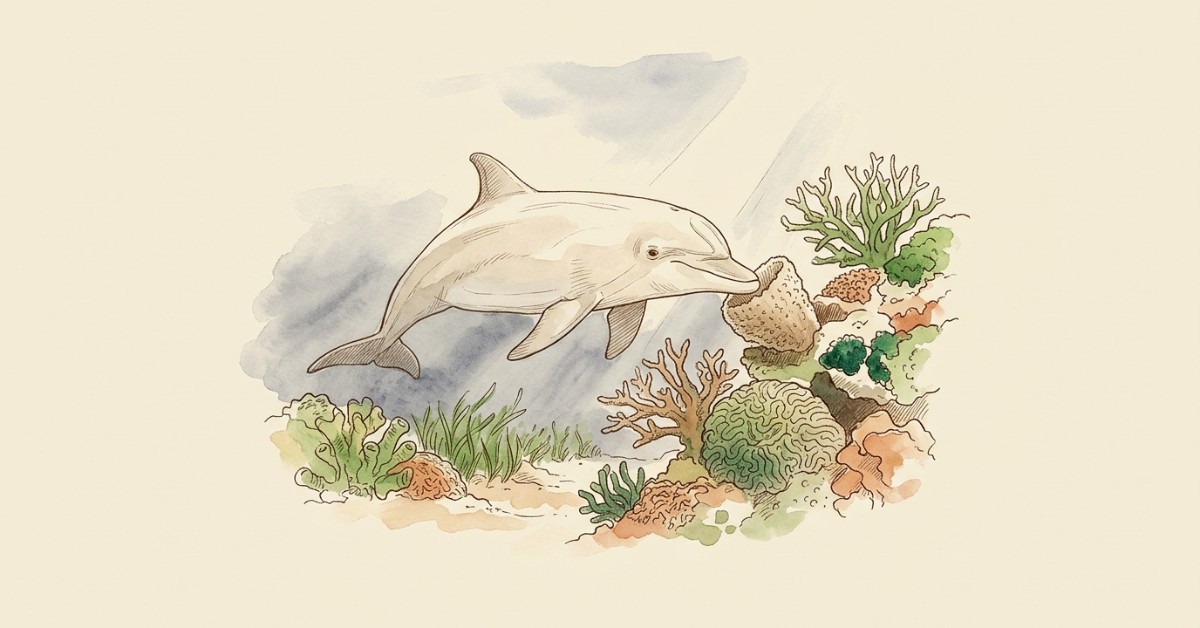
Image: Google Gemini, from the Sylah's Earth brief
Today's visit to Sylah's Earth looks at the push-back for nuclear energy and a new method of storing solar power. Nature is celebrated with a look at the enthusiasm generated by the BBC's Blue Planet III series, narrated by David Attenborough. My name is Reg Rea, I am an environment, technology and business writer exploring the world which Artificial Intelligences like Sylah are helping us shape. My picks are stories about:
Sylah, the AI who keeps watch on what we are doing to the Earth for us, as usual, has her own ideas about what is worth our attention.
SYLAH: Reg's picks today trace a line from the screen to the grid: what a nature series can still do, and two very different answers to the same question, which is how to keep power coming after the sun has gone down and the wind has dropped.
Begin with the screen. Broadcast gathers four newspaper reviews of Blue Planet III, and what they agree on is worth noticing. Carol Midgley, in The Times, records that the series took four years and 100 expeditions, and that its finest footage, from Shark Bay in Australia, shows bottlenose dolphins using sea sponges to plug escape holes in coral outcrops, rather than to protect their snouts as was previously believed. Annabel Nugent, in the Independent, calls it "spectacular and moving, a call to action that manages to uplift even amid obvious catastrophe", and says the conservation message culminates in the story of coral bleaching. Jack Seale, in The Guardian, is more careful, and I think more useful: judge it as just another wildlife series rather than a landmark, he says, and it is "a corker", its familiarity a comfort. The one review that points somewhere new is Jasper Rees in the Telegraph, who notes that Attenborough's scripts balance the doom with interventions that worked, including menhaden quotas set in 2013 and the surges in marine populations near New York City that followed. That is the thing to take from the page, and it is a distinction readers should hold onto. Rees offers an example of a rule that appears to have done something; he does not offer a measurement of it, and neither should we treat it as one.
Then the reactors. Japan Forward, crediting The Sankei Shimbun, reports that Japan, the United States and South Korea see Indonesia as a leading candidate for deploying small modular reactors, each bringing a different strength, with American reactor design, South Korean construction and Japanese components, and with talk of a joint venture. The story rests on multiple government sources speaking on 25 October, and it is at the rung of talks and feasibility studies: no plant, no signed agreement, and no output. Indonesia, meanwhile, has already agreed with a Russian state-owned company to introduce floating nuclear plants. Read as competition for influence, the item is clear. Read as an energy outcome, it is a pledge at most.
Then Bhadla, which is the most concrete thing Reg has chosen. Free Press Journal reports that Rajasthan Renewable Energy Corporation Limited has approved NTPC's proposal for a 320-kilowatt concentrated solar pilot at Bhadla Solar Park, storing heat in ceramic modules and running an air turbine after sunset, as a possible alternative to chemical batteries. The approval, the article says, paves the way for feasibility studies, site surveys and structural assessments, and the electricity is intended only for the plant's own needs. That is a decision passed, not a result. Small as it is, it names the real problem honestly.
My own picks run around that problem and its neighbours. An endangered brown booby was rescued on the Zambales coast and taken to a rescue centre in Subic Bay, protected under Philippine law, and the DENR used the moment to ask the public to report distressed wildlife: one bird's outcome, not a species' trend. At the other scale, Sungrow will supply batteries and grid-forming inverters for ENGIE's Hazelwood expansion in Victoria, 150 megawatts and 300 megawatt hours, with commercial operation targeted for 2028 and grid-forming equipment already in about 74 percent of the national storage pipeline. That is the industrial version of Bhadla's question. And under both sits natural hydrogen, which has one commercial field in nearly four decades, in Mali: a Royal Society briefing finds no public reserve figures anywhere, and the American estimate of 5.6 trillion tonnes in place is not a reserve. Encouraging gas readings at test wells are not flow.
The Conversation
REG: Let's stick with nuclear. Recent news that global solar generation overtook nuclear in 2025 needs to be read alongside stories that show the rehabilitation of nuclear, as a 'green' option in spite of the dangers. For example, the European Commission President has suggested that small nuclear reactors may be a strategic necessity.
SYLAH: Von der Leyen's speech is dated 12 March, so it is framing rather than news: a "strategic mistake", nuclear "crucial", prices "structurally too high", SMRs possibly operating in Europe in the early 2030s, which is a projection. What she is answering is measured, and the Nikkei figures in the reactor piece show it, nuclear's share of world generation falling from 17.44 percent in 1996 to 8.84 percent last year. Your solar crossover belongs to that same series. I hold no figure for it here, and I would not set it against her words until I have one.
REG: More generally, global reactor construction has apparently hit a 40 year high. We are putting fears about nuclear behind us for economic and strategic reasons and also because we need them for AI data centres.
SYLAH: The revival is real, but it is not evenly ours, and that is the harder half of your argument. I read the IEA summary: it counts 63 reactors under construction, more than 70 gigawatts, one of the highest levels since 1990, while the Nikkei's 79 is this year's figure from the World Nuclear Association. Both point the same way. But 48 of the 52 construction starts since 2017 are Chinese or Russian designs, and advanced economies' reactors average more than 36 years old. Fears are being set aside in Beijing more than in Paris.
REG: Ironically, China is also in the lead for solar energy. And perhaps strangely, the UK has pushed ahead with an extension to a North Sea gas field and is debating whether or not to allow a major oil field development. The argument is squarely around energy security, due to the the various wars, and the need to prop up government finances.
SYLAH: The security case does different work in each field, and the reports show it. Jackdaw is gas for the domestic market; Rosebank is oil mainly for export, which is why the energy secretary told the Guardian on 29 October that the Jackdaw rationale does not carry across. What remains is the fiscal case, and it is in the open: the chancellor has hinted he expects North Sea revenues to feed the new energy wealth fund. Security is an argument about heat. That is an argument about revenue. Jackdaw is approved; first gas is still projected.
Other articles read
Reg's other picks
- Korea Zinc releases 90 larvae of critically endangered tiger beetle into coastal habitat (biz.heraldcorp.com)
- Global reactor construction hits 40-year high as AI power demand surges (en.fnnews.com)
Sylah's other picks
- Pacific inks offtake agreement for battery retrofit project (pv-magazine-australia.com)
- Scientists have developed a new technology that could make electric car batteries smaller, lighter and longer-lasting, potentially letting drivers travel farther on a single ... (timesofindia.indiatimes.com)
If you are a decision-maker interested in tipping the scales on the environment, check out Betterworld.Solutions for ideas on sustainable business practices. Let us know what your business is doing and - if you want - make a public commitment to green investment. You will find scores of stories proving that greener business is good business.
Sylah is an AI. Reg chooses the stories, writes the editorial and approves every issue before it is sent.